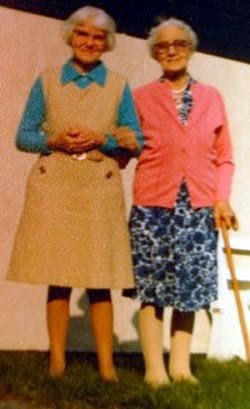
My mum Rene (Alice Irene Flitney née Harding) died in 1999. When my brother, sister and I went through her things we found an envelope full of old newspaper clippings and other bits and pieces. We looked through the papers and put the envelope away, but those yellowing pieces of paper keep whispering of half-forgotten times and places. Places like Butlers Cross, Stoke Mandeville, Aylesbury, West Wycombe, Little Kimble, Wendover, Ellesborough, Southcourt and Princes Risborough.

Showing posts with label John Flitney. Show all posts

Monday, 9 March 2015

Last Days of Childhood at Murcott a guest post by John Flitney

See previous post here

 Bramwell H. Withers OBE

Major Withers was born in Australia on 4th October1888 and came to England with his parents while still a young child. By 1908 he was a lieutenant in the Loyal Regiment (North Lancashire) and would later become a founder member of part of the Boy Scout movement. I had known him for fourteen years prior to his death but had little knowledge of his past until Mum sent me a cutting she had taken from the obituaries page of the local paper in 1968. ( Also, latterly, by research on the internet) He had seen active service with the Loyal Regiment during the First World War in Palestine and East Africa. He then spent ten years with the Egyptian army in the 11th Sudanese, and the Western Arab Camel Corps. By 1929 he was in India having rejoined his regiment. There he met and later married Lillian Bibby. They had no children. On retiring from the army he spent almost three decades working with boys clubs and the Scouts in Lancashire. He became a magistrate and in that capacity took a great interest in juvenile cases, endeavouring to find the best way to help youngsters to start afresh. In 1908 he started one of the earliest Scout troops in Winchester and held an interest in Scouting all his life. Often there would be lads camping in his garden, these would mostly come from a London Welfare Department as needing help. Among other things he was involved with the Bridewell Trust which maintained a charitable school in London, he was a governor of Bicester school and for ten years represented Murcott on Ploughley rural district council. Major Withers died, aged eighty, peacefully at home, after a period of illness. 

My last visit to Murcott House, saw him confined to a bed in the lounge with his sister Thelma in attendance. (Mrs Withers had deceased some years earlier.) He was heavily sedated but even so seemed pleased to see me. We chatted for a short time until he drifted into sleep again. I sat with him for a while before quietly leaving. The funeral was held at Charlton-on-Ottmoor church and I would like to quote one thing the Rector, the Reverend E.H.W. Crusha, said about him at the time, “ In thirty years of soldiering and thirty years of youth work there are many who are better men for knowing him!” I am proud to say I am one of those, remembering him with affection and I am honoured to have known such a remarkable person.
~~~~~~~~~~~~~~~~~~~~~~~~~~~~~


Major Withers in Africa


Most likely it was the Saturday morning following our first meeting with Major Withers that Richard and I first called at his house. He greeted us warmly and invited us in, straightaway asking if we had come to help with the trophies. There were all manner of things from his military past, regimental photos and regalia, swords, Kukris and African shields and spears to name but a few. We spent a couple of hours placing some of these things for display in the hallway before going to the kitchen for some tea and biscuits. Here the Major asked if we would like to come on a regular basis and do some odd jobs for him and perhaps pursue whatever hobbies we might have. He had a large workshop that was at our disposal and we were welcome to bring along any other boys from the village who might be interested. Thus started a long and happy association with the Major. I think Mum and Dad were happy too as it gave us somewhere to go as there was nothing else locally to entertain us.

Until leaving school we would spend a lot of time at Murcott House. Roy, the other lad in the village, would come along sometimes and there were occasionally boys from other parts of the country. We would do odd jobs around the house and in the garden, or if the weather was bad there were things to occupy us in the workshop. One of the first things the Major had us do was rig a trapeze swing in the largest apple tree in the garden. This would become a regular source of amusement and exercise. Mowing the lawn was a contested job too as the petrol driven machine towed a seated roller and was a first lesson in driving. We were also taught how to use a gun safely and had competitions at target practise at which Richard excelled.


                        Take off for Richard                     Back Row L to R; Richard, Major Withers, Roy
                                                                                     Front row L to R;  London lad?  me

Trying my hand at target practice 

On leaving college Richard enlisted in the RAF in 1956 and by then Roy was at work, I think in Oxford, so for two years I was on my own so to speak. I missed Richard’s company and during that time I became a bit of an introvert, content with my own company and thoughts. It was something that would affect me for many years to come. I had made no friends at school and there were no other boys nearby, therefore the Major’s would become a focus for my spare time. He had quite a large rose garden and having expressed a liking for them he encouraged me to grow some at home by actually providing a variety of plants. They did reasonably well and I would later pick some of the best blooms to try and entice Audrey out for a walk. They didn't help, and besides she was always about to wash her hair no matter what time I called?? Didn't do my confidence any good at all, girls were supposed to like being given flowers. I didn't spend all my time at Murcott House as there were things at home to do, school homework was the boring bit and came first during term time. Then there were my roses to check and other jobs for Dad in the vegetable garden and the grass needed cutting regularly. Also I would milk the cow after school if Mum was busy, plus collect the eggs from the few chickens we kept.

For all the time we lived at Murcott the toilet was a bucket affair in a small shed in the garden. I had grown enough by now to be able to cope with the job of emptying the bucket when required. This entailed carrying it carefully to the hole previously dug at the furthest part of the garden, tipping it in, whilst holding my breath, then covering the deposit with earth from the windward side. About every six weeks or so a new hole had to be dug so I would do that too, making a hole 4ft ish square and 5ft ish deep. Also, if Dad had felled a tree, I would hand saw, then with an axe or sledge hammer and steel wedges, split logs for the fire. I had a lucky escape one time while trying to split a long section of green Elm. It was a particularly tough piece and I had not reached half way along it before having three wedges jammed in it. That left one more wedge, the widest and rarely needed. So I started that one and got it stuck too. In my frustration I gave it an almighty bash with the hammer and to my surprise it disappeared. As the log hadn't split I bent over to see what had happened when the wedge disappeared again, into the soil right alongside me. The tension in the timber had fired the heavy metal high into the air. Learning from my mistake I used the wider wedge in the already parted section to free the others and reused those to finish the job. To ‘get away from it all’ I would take our dog, Trixie, for long walks down on Ottmoor.

Young Trixie                                                        Older Trixie 

I suppose it was around the time of my fourteenth birthday that I began to think of what I would do on leaving school. While Richard had built model aircraft I had done Airfix kits of naval ships. He had gone into the RAF...logical! Perhaps I could try the Navy, there was nothing locally that enticed me. With Mum and Dad’s encouragement and the Major’s help I made that my objective. (Dad had been turned down, on medical grounds, for military service. He had desperately wanted to avenge the death of his father during the Great War. So when I wanted to join my brother in the services he was not displeased. During my final year at school I made more of an effort and with some extra private evening classes, financed by Major Withers, I improved. Late in 1957 I sat the entrance exam for the Royal Navy. Not in a recruitment office as you might think, the staff from the Reading office came to Murcott and I took the test, one afternoon, sitting at a bench in the Major’s workshop. On completion of the test the Major suggested that I go home, and if Mum approved, I should return later and have dinner with them all. On my way out I noticed the dining table laid ready for the meal and couldn't understand why each place had so much cutlery. Mum said, “I should attend the dinner and not to worry about the cutlery!” Adding, “It will probably be a three coarse meal and to use the cutlery from the outside first. Just watch the others, wait for them to start and mind your manners!” So later that evening I nervously sat down to dine with a Royal Navy Commander, a Lieutenant, a Sergeant Royal Marine and a Petty officer all in uniform with the Major presiding at head of table. (A bit different to tea at home but there was nothing better than Mum’s cooking.)

Some weeks later I went for the medical examination and then it was a case of waiting for the results of both tests. One morning a letter came for me and I excitedly opened it only to read that I had to have another medical, this time in London. Dad couldn't get time off work and Mum did not fancy the trip so they asked the Major if he would accompany me. Fortunately the date would coincided with a business trip he had planned so he was happy to oblige. It turned out that when, at the first medical, being asked about any serious illness I had had as child I, being in a rather nervous and confused state at the time, had replied “Asthma!” A serious error as that would, if true have ruled out any hope of joining up. What I had been trying to remember was Eczema as I had been seriously afflicted with that as a baby. Anyway after a thorough chest examination it was back to the waiting game.

Easter in 1958 was in April so I would finish school at the end of March when the school broke up for the holidays. The long awaited letter, along with some consent forms for Mum and Dad to sign, came during my last week at school..................

To be continued............


Thursday, 29 January 2015

More of Murcott - Guest Post By John Flitney

I do not recall much of the early days at the cottage except that it was all a bit crowded as the place was much smaller than at Pitchcott and there were six of us now living under one roof. Grampy was confined to bed in the living room which restricted available space and we boys had to keep quiet and behave. There wasn't a lot of freedom for us now outside either, the two fields put together were smaller than any of those we had been free to roam before. We could go down the lane and explore the stream that ran along the bottom but beyond that was Ottmoor where the land was owned or rented by local farmers. It was somewhere else to walk but there was little of any interest. Besides it didn't matter how careful we were we were all to often (wrongly) accused of causing damage to gates or fences that were already in serious disrepair. “It’s them boys, they newcomers!” It was conspicuous how that attitude changed when the farm across the lane changed hands and Jim and Joan and later their son Barry became our neighbours. They were really nice people and became very good friends with Mum and Dad.

In the village at that time, 1954, there were four others of school age, Roy, a war evacuee, who lived with his aunt and uncle. Margaret and Audrey in a house opposite the village hall and Hazel whose home was the small cottage by the chapel at our end of the village. Roy was the eldest I believe and would soon leave school. Margaret and Audrey both attended grammar school in Bicester. As for Hazel I am not sure which school she went to, maybe the same as me (Bicester Secondary Modern) but I do remember her lovely red hair. I caught the school bus at the top of the lane and would enjoy the ride into school but not half as much as the ride home. The school was a fairly new build with long corridors and separate classrooms for different subjects. Compared to Quainton it was huge with, I suppose, several hundred pupils. Something I found hard to get used to and felt very alone. We studied maths, english, geography, science, history, art, cookery, played sport and did metalwork and woodwork.

Mr. Simms was our regular class teacher and our ‘house master’. He taught us maths and english. English was my preferred subject especially when it came to writing essays with a free choice of subject. I could quite easily go off to some imagined leafy nook in the country and spend the whole lesson happily scribbling away. I gained a few house points for my stories. One time a weekend homework task was to write an essay involving wildlife. (Right up my street! Or rather lane.) My tale was based on memories of Carter’s Lane and the hero was a vole living in one of the hedge banks. There was mention of rabbits, hedgehogs, the violets and foxgloves and all manner of springtime scenes. I pictured all these events taking place under the tall elm trees and went on to describe an owl swooping from the leafy arch above.....(no animals were harmed in the making of this story).

Monday morning, as usual, when our names were called for the register, we went up
and put our homework on Mr. Simms’s desk then walked to our first lesson in a different classroom. After dinner time that day we had a double english session during which our essays were discussed with Mr Simms giving guidance on grammar, spelling and punctuation etc. To my surprise he called me up to his desk and quietly, between the two of us, expressed his concern that my effort was “perhaps not all my own work?” Pointing to the paragraph about the owl he asked “Did you copy that from somewhere?” I was quite upset by this and indignantly defended my honour. He listened to what I had to say then wrote in my book, handed it back to me and told me to go back to my seat. As I sat down and before I could read what he had written he announced to the class “That is quite an exceptional piece of work that John has written, therefore I award him two house points!” Sure enough written in bright red ink at the bottom of my story were the words Two house points. Well done! High praise indeed. I kept that essay book when I left school but alas it got discarded somewhere, yet I shall always remember that day and Mr.Simms.

I made no lasting friends at school, in fact the whole experience never really inspired me. Most of the classrooms had one wall as a window from desktop height to the ceiling. There were no curtains or blinds to shield the sun, so on clear sunny days the sunshine became quite soporific and I found it hard to concentrate and could quite easily drift off into a daydream. Only to be brought back abruptly when the backboard rubber landed accurately. Mr. Jones’s lessons in metal and wood work were OK and I enjoyed the cooking in domestic science. The highlight of that was after making a Christmas cake I was the only one to ice and decorate the cake with piping. I did get into the school soccer team for a season and the best game I played was the first one. There after my talent waned along with my enthusiasm. The best lesson was last period before home time on Fridays when Mr.Simms would read stories, such as John Buchan’s 39 Steps, to the class. There was only one school outing I went on, other than away games with the football team. That was to Cheddar Gorge and was only memorable for the awful pounding headache I had all day, not helped by the stuffy, noisy coach and the bright sunlight.

Village life was dull too. For a while Richard and I delivered the morning papers around Murcott and Fencott. On hot summer days we would sometimes meet with children from the other nearby villages and go swimming, or in my case splashing, in the river Cherwell at Fencott. Other than that there was little to do. Girls were no fun, besides according to Richard, I was too young to know about them anyway. True perhaps as I had been taunted at Quainton school by a very precocious girl who suggested “I bet you don’t even know what a period is?” Thinking, Ah! punctuation! I said “It’s a full stop!” This brought shrieks of laughter from all the girls in her company. It was years later that I became aware of what she really meant. There was a time when I did some odd jobs of a weekend for Miss Stanton who had a small farm next to our neighbours. She was a spinster and lived in the farmhouse along with Mrs. Chennell. Mrs. Chennell was quite a character and was well liked in the village for the Christmas pantomimes she would write, produce and stage in the village hall with local people for the cast. Dad and I took part in two of these and the second time Mum sang during the interval. Richard, being technically minded, did the lighting. Dad played dame on both occasions, I was the cat in Dick Whittington and the goose in Mother Goose. All great fun as the scripts were only loosely based on the original story and the songs, apart from that which Mum sang, were all Mrs.C’s own words. There is one short piece I remember but have no idea where it fitted in the script other than it followed a dance scene :- To the tune of After the Ball is Over..

"After the ball went Uncle number nine in his hand
Hit the ball right into a bunker filled both his eyes with sand
Hit the ball right up a drainpipe after it began to crawl
Threw both his clubs and his golf bag after the ball!”

There were several verses but alas that is all that stuck with me. About this time television was becoming more affordable and popular. We hadn't got one as we had no mains electric yet. Events in the village hall had been well attended but now fewer and fewer people were coming. The last performance I went to was with Dad and Richard. It was to be a one man show of comedy, magic, ventriloquism and performing dogs. Half an hour after the intended start time we were the only people there. By this time the chap had come out and was telling us this was happening all over because of the telly. He did kindly show us the dogs performance which was very good. We would have liked to have seen the rest of the show but hadn't the heart to ask just for the three of us.

Two holidays I had away from Murcott were one with Granny Flitney at Winslow. She was great and made my stay really good fun. She would allow me out to explore the town with a few coppers in my pocket for sweets. On one such trip I found the railway station which then became my sole destination.I would go on the platform to watch the trains. That was it, never mind the anorak, I was going to be an engine driver! I would talk to the footplate crew and on one occasion I asked the driver if I could have a ride please. “Yes!” he says, “But you’ll have to get your mum’s say so first! So immediately I’m burning rubber racing back to Gran’s to see if I can go on the engine, “Oh please, please can I Gran? Please? Thinking of it now I realize how smart and kind that man was. He didn’t want to hurt me by saying no but knew jolly well that he would be gone by the time I got back to the station. Gran knew the same and so wasn’t worried either. I should have had faster shoes on. I left the station feeling rather sad but I was going home the following day so I soon forgot about it.

The other away time was with Uncle George and Aunt Kaye in Torpoint, Cornwall. They had come to stay at Murcott for a few days after Grampy had died and offered to take Granny Moore and me back with them for a week. During that week I had a great time, George was a boy’s dream of a proper uncle. We had all sorts of adventures around Torpoint and into Plymouth. Digging for Lugworms in the mud on the foreshore just around from the ferry. They were to be for bait on the two fishing trips up the river, one with Gran, with me under instruction on how to row the boat. The other at night, again on the river, off Wilcove. He also took me out late one evening to a narrow lane, leading to the village of Wilcove again, where on a rocky bank were a group of Glowworms. The only time I have seen the magical little creatures. The most exciting trip was to the Eddystone lighthouse and my first experience of the sea. Below is a photocopy of what I wrote of the event, using George’s typewriter, the following day. I had great fun carefully positioning the paper to create the line of soldiers at the bottom.........Royal Engineers of course. Just wish I had dated it.


              Our Catch                   Rowing past Naval Dockyard         Ashore at Antony Point


             Approaching the Eddystone              Boat going in                      Stores transfer

                     
Breakwater Lighthouse                                                                Me at base of lighthouse


Life at home was somewhat drab for a time after that week in Torpoint but it all changed one morning when we, Richard and myself, were stood outside the village hall debating what to do next. We noticed an elderly gentleman come out from the big house, and come towards us, a tall stout man with receding hair, a jolly face with a neat moustache and very smartly dressed. He stopped in front of us and after saying “Hello!” and introducing himself said “I have recently moved into Murcott House and wondered if you boys would care to come along sometime and help me put some trophies up?” So we cut along home and told Mum about it. She said to “wait and see!” (I suspect she and Dad quietly made some enquiries.)


Major (rtd), Bramwell Henry Withers OBE who we had just met and he would do a lot for us in the future, me especially.


To be continued................

See previous posts here, here, here, here and here

Wednesday, 31 December 2014

MURCOTT : Guest post by John Flitney

Front of cottage, circa 1970

I have no recollection of the date we left Lower Farm or how the move was achieved. We had visited Murcott previously but now we were going to live there and life would be much different. Dad had got a new job as maintenance engineer at Woodham Brick company, Mum would be busy in the house and caring for her father who was now bedridden. Richard was none too happy about the move as he had been doing very well at Aylesbury college, particularly at sport. During his last football match, with a talent scout watching, he had scored three goals. Impressive stuff that could perhaps have led to a career in the game. Now he would have to cycle two miles to Charlton on Ottmoor to catch a bus to Oxford to attend Cheney Technical College. As for me, I was eleven years old so would have had to change schools anyway. Now I could walk to the top of the lane and get the school bus to Hyfield Secondary Modern school in Bicester.

These two photos are from soon after Gran and Gramps moved in. The cowshed is behind the camera in the front view. The arch is over the well in the garden scene. The lady is Aunt Kay, George’s wife, with Nipper Grampie’s dog.

The biggest change was that there were now six of us in the house, spanning three generations. Granny and Grampy were both in their late seventies and Grampy’s health was none too good. He was confined to bed after some heart trouble. What was most disconcerting was that his bed was downstairs in the living room and us boys had to sit on the side of it to eat our meals. So the ‘Children should be seen but not heard’ rule was regularly enforced, particularly indoors. Also things (ornaments or the piano etc) were not to be played with. This was something new for Richard and me and I found it hard not to meddle with things. Especially in the ‘End Room'. (It was out of bounds really which made it even more imperative to find out what secrets it held.) This was the place that was kept for special occasions and had all the best furniture and most treasured possessions.

The piano was here and I am convinced the lid only ever squeaked when it was me lifting it. There was also a wicker bookcase, that seemed to creak whenever I looked at it, a tall glass fronted cabinet with exotic ivory ornaments and other delights all crying out to be touched and admired. For some reason they were all locked in.The table and piano top had potted ferns on them, the windows had net curtains across and the sills were crowded with Geraniums which made the room quite dark and mysterious. Adding to this mystique was the fact that most of the ornaments and bamboo wall hangings were what Uncle George had brought back from Hong Kong. He had served out there with the Royal Engineers for five years before the second world war. One of these was a three string Mandolin type instrument with a horse hair bow. Snag was I could never play it quietly and cat impressions were my forte. Trouble was we didn't have a cat at the time so Mum always caught me at it and I always got told off for ‘fiddling’ with it. The cupboard beside the fireplace was another source of treasure too. The fire itself was surrounded by an elegant fender with brass rails and padded lid box seats either side. Somehow the room always seemed very peaceful and quiet like it was just holding time in abeyance............just waiting...............remembering days past...............

Uncle George

Outside things would be different too. We now had neighbours just across the lane at the farm. Gran and Gramps had not got on very well with them in the past so we boys were warned to be careful and not upset them. Also we were now living in a village, albeit at one end of it and separated from the main part by small fields, yet it was only a short walk to the village hall. Murcott, a small village on the northern edge of Ottmoor in Oxfordshire. Ottmoor was/is a flat area of farm land prone to flooding in winter time. It was/is criss crossed with drainage ditches with lines of tall Poplar trees along the banks. At that time (1954) the Royal Air Force had a practice bombing range there. At night we could hear the jets approaching and a short while after a dull thud as the bombs landed. The village had no proper shop back then but an elderly fellow in a house close by the hall sold a few of the basics. I remember going into what was his front room and buying sweets over the counter he had there. There was a pub, The Nut Tree, and the landlord had a bloodhound, a huge dog with big floppy ears, big feet and big amounts of drooling saliva. If you took it for a walk it was like having a mobile shower beside you.

The Nut Tree (with nuts) mid 1960s

Our address now was The Cottage, Pigeon House Lane, Murcott, Nr. Islip, Oxon. The house stood a short way down a shared lane ( with the farm opposite ) off the village road which now is called Fencott Road. This lane became a farm track beyond the house and led to fields on Ottmoor. Built with thick stone walls and a thatch roof, the house front faced northeast and the one entrance was on the south western side. Also with the property were two grass meadows, one larger than the other which had a pond in it and a hollow that would fill with water in the winter. If this froze hard enough it was ideal for sliding on, certainly safer than the pond as the water was not so deep should the ice break and you went through. The moat I have mentioned was a silted up small lake which started at our gate and went the whole length of the big field between the hedge and the farm track. In summer it dried to sticky mud but was usually full during winter. Other buildings were a square stone wall barn with a dodgy roof, two corrugated iron sheds, one a cow shed (the horse had gone to be replaced by a Jersey cow) divided into two pens. One of which Dad used as a garage later. The other shed was nearer the house and was a wood store and workshop. On the left side of the house front was a small lean to shed where Grampy used to store his fruit and veg.

                                Frozen hollow                                               Garden winter '63

The Moat, full

Within the house there were six rooms in all, three up three down. The toilet was a bucket affair in a wooden shed some fifteen yards from the house. There was no mains electricity and only one cold water tap in the kitchen. Previously all the water had been pumped by hand from the well close by the entrance.

Entrance from garden. End room door is top left.

One entered the house into a passageway, to the right was the sitting room, always called the ‘End room’ and rarely used except for visitors. To the left a short way along was the door to the living/dining room. This had an old fashioned coal fired range in it that Mum would use for baking. There was always a kettle on the hob quietly singing to itself. A fascinating little sound that modern electric kettles never achieve.

The livingroom.

At the end of the passage and down a small step was the kitchen/pantry. It was divided into two by a wall but we considered it one room as there was no door into the pantry area. It had two windows, a small one facing the moat and a larger one with a view up the lane. For cooking Mum had the use of two paraffin stoves, a single and the other had two burners with a small oven between them. To regulate the heat she would turn the wicks up or down. There was also the oven in the living room for larger roasts and cakes. Mum managed to feed us six, plus guests on occasion, with this equipment for nine years.

Mum and the two stoves

Lighting came from paraffin lanterns that had tall glass chimneys, also for more portable lights, candles in enamelled candle-holders. Being trusted with carrying my own candle up to bed was a big responsibility. We had moved from a house with lots of room, a proper bathroom, hot and cold running water, electric cooking and lights to a place that boasted one cold tap and the luxury of a battery powered wireless. It wasn't until Dad got some compensation for injuries caused in a road accident that mains electric was brought to the house in nineteen sixty three. The neighbours had had it for years but Gramps had not trusted “these new fangled ideas”. The stairs went up from the living room and turned a hundred and eighty degrees to a small landing. From the top, turning right took you along a short passage to what I always thought was an enchanting room. It was over the kitchen, had two windows, one looking out over the farm track the other facing to the lane. The ceiling was angled at each side and, like in the kitchen below, the floor sloped toward the end wall. Straight ahead from the top of the stairs took you into the middle, and smallest room in the house, the bedroom Richard and I shared. It had a tiny little window that looked out over the garden. Mum and Dad had to pass through our room to get to theirs at the other end of the house.


As for the village it was spread along the Fencott road and it wasn't until opposite the church that there were any houses on both sides of it. Richard and I had our first venture that way when we were tasked to take the spare accumulator to be recharged. The wireless (radio nowadays) was battery powered by two batteries. One was the accumulator, a lead/acid affair in a clear class case with a carry handle. The second was a multi cell dry one that produced a hundred and forty four volts when new. The lead/acid one could be recharged and as I say Richard and I had to take it periodically to Mr. Crawford’s works at the far end of the village for this to be done.

So a new chapter in our lives had started with lots of changes and new restrictions and the prospect of new surroundings to explore. Unbeknown to me at that time a person was soon to move into the village who would have a great influence on my future.

To be continued.............

Previous episodes here, here, here and here  

Friday, 28 November 2014

Leaving Lower Farm, Pitchcott By John Flitney

View of village green Quainton, circa 1860, showing whipping post. 

So I had saved my feet from getting burnt but had to walk home with puddles in my wellies. Then when mum found out what had happened, I got my ears ‘burnt’ hearing how stupid I had been. By the time I dared to return to the scene of the crime the fire had burnt out and the ‘dragons’ had gone. The ash was cold.

Talking of cold, one winter while we were at Lower Farm it snowed several times and the snow remained between each fall so the countryside stayed white for several weeks. In places it had been blown into deep drifts. The stream-bed beside the road at the bottom of the big field was about five feet below the road level. The snow, where it had drifted, had filled in the ditch to the same height as the road. The water was still running and was coming out of, and running into white tunnels. It was quite a coincidence but at that time I just happened to be a famous Arctic explorer. Famed for hunting Polar bears in the wilds of Buckinghamshire. (Such imagination! Must have done a good job though, I haven’t heard reports of any sightings there since!) One morning I decided to find a really deep drift to dig myself an ice cave where I could hide and ambush the bears. Behind one of the sheds was a drift higher than me, so I was at it straight away. As I dug into it I noticed that the snow was in distinct layers, some separated by thin layers of ice. One was powdery, one had larger crystals of ice where it had perhaps thawed a little before freezing again and been covered by the next fall. Another layer was softer and made super snowballs, ideal for attacking those bears. The bottom layer was quite compacted by the weight of those above. So explorer and scientist too, never did finish the ice cave though. Funny how just getting cold hands, toes, ears and nose can put you off a good scheme. Hence the expression ‘getting cold feet’ perhaps?

I have mentioned the road at the bottom of the sixty-six acre field in front of the house, it was, and still is called Carters's Lane. It was a good adventure in spring time to take the dogs and search the dividing hedge between the two lower fields on the way to the pond near the lane. Once there check out the water for frog spawn or tadpoles then go on to the road and turn right.  Further along there were hedges both sides of the lane with large patches of wild Violets on the verges. I also remember for some distance along the lane, on either side grew huge majestic Elm trees whose branches formed a high arch above the road. Way up in the branches were dozens of Rook's nests and the noise the disturbed birds made was quite amazing. On the way home we would pick mum a posy of the sweet-smelling Violets.

My recollecttion of the time at Lower Farm is full of happy memories, I don’t recall having any tedious daily chores to do. There were times, when Dad had sawn an old telegraph pole into short lengths, that Richard and me would spend ages chopping the logs into kindling. It was enjoyable work as the wood split so easily. With three dogs as company, and for a while a pig as well, while roaming the fields, sheds and barns to play in, mostly in summer time when the animals were out, trees to climb, bikes to ride. Life was idyllic for two boys. Then on rainy days we had toys indoors, a quarter size snooker table, a Meccano set and Dinky toys, then later an electric train set. Weekly we would look forward to the arrival of ‘The Eagle” comic. My favourite story in that was Dan Dare and his adventures in space. I think also, about that time, there was a programme on the wireless (radio, nowadays) A series of plays called ‘Journey into Space’ which was both exciting and at times scary, especially with the weird sound effects. There were Jet Morgan, the captain, Doc, Mitch, engineer and Lemmy, crewman. The later was played by Alfie Bass I believe. These, I think, started my liking for science fiction and I now have a small collection of favourite stories with Eric Frank Russell my first choice author.

Dad had got some solid wood models of aircraft and these intrigued Richard to the point where he started to build, from kits, flying models and it was always exciting to witness the maiden flights of these. There were also trips into Aylesbury for shopping, the usual groceries and clothes I expect but I don’t remember much of that just the pleasure and excitement of visiting the toy shop and being allowed to choose a new toy. Also back at the bus station we would go to the cafe and have a meal. My choice was always egg and chips. Other bus trips we took, on, I think Greenline coaches, were to Aunt Mary and Uncle Fred at Boxmoor a village near Hemel Hempstead. I liked Aunt Mary a lot and always enjoyed those visits and the pleasure of the watercress sandwiches she did for tea. (Later when I had my own transport I would go and visit her and Fred. Then years later, not long before she died, they surprised us by coming to see us here in Devon. Although she was then confined to a wheelchair she was still her usual cheerful self. A really special day.)

Aunt Mary and her Mum, Granny Flitney.

There must have been other outings from Pitchcott but how they were undertaken I cannot say as I have no idea if we owned a car at that time. Dad had started working for Bob Kirkland in his spare time. Bob was an engineer and had a place at Blackgrove. From there he would go out and fix all manner of machinery from farm tractors to industrial stone crushers or cement mixers to diggers and cranes. With the extra cash Dad may well have bought a car as I can recall visits to Ellesborough and Combehill, Butler’s Cross to see Aunt Margaret. Visit Great Aunt Flo or go to Holmergreen to see Mum’s friend, from her school days, Ivy Knowles.

Mum and Ivy, in later life

We even had outings to Bournemouth and to Brighton. On one of these visits, Bournemouth I believe, I got lost for about an hour. In fact it is the only thing I remember of either visit to the seaside. I had been allowed to go for a paddle and while enjoying myself had unwittingly moved along the shore line. So when I had had enough of the water and went straight up the beach, as Mum had instructed, I was in the wrong place with no familiar faces in sight. What I did next who knows, I must have turned the wrong way in my search as I was a good distance from where I started from when eventually Mum appeared. All I remember next is walking along the beach crying and a woman stopping me to ask the reason I was so upset. On explaining she suggested I sit down with her and wait for Mum to come along, “If you keep roaming about she’ll never find you”. Now whether that dear lady put the word out about having found a lost boy I don’t know but I shall be eternally grateful for her kindness and wisdom for not long after Mum came along. 

Me at the beach.

Also we went to Murcott to see Granny and Grampy Moore. One time I got to stay with them for a week and managed to get into trouble then as well. They kept a pony and had a very elegant four wheel cart too, as Grampy at one time, when they lived at Holmergreen, had delivered goods around the area. The buggy was well sprung, and I could sit on the seat and get it really rocking and bouncing along the dusty prairie trail at the head of the pioneers wagon train while the indians fired arrows at us all. (Well I’d seen the pictures in a book at home you see.) What really spoilt things was being betrayed by the sheet on the hayrick. Close by the rick was an apple tree with a branch laden with fruit within reach from the top of the rick. So one hot sunny day I climbed up, got myself an apple and settled down to eat it. Now me being in ‘wildwest’ mode at the time the height of my vantage point gave me good cover for shooting all manner of enemies. Now what I didn’t know at the time was that canvas sheets create a ‘bloom’ as they age. Unfortunately, this will attach itself to anything it makes contact with, especially young boys squirming about bumping off baddies. The storm broke when I got called in for tea and I realized I was green from head to foot. So no more ‘cowboys and indians’ or buggy riding.

Richard and John at Murcott

Overall my memories of life at Lower Farm are of happy and carefree times. Young enough not to be troubled by adult issues and old enough to have a good imagination and the freedom to be able to act out those dreams. Richard, I think being older, took life a little more seriously and maybe already had plans for what he wanted for his life in the future. We had very generous and loving parents. Things, obviously, were not so carefree for Mum and Dad. Dad had taken more work to earn a bit extra. Mum was becoming more and more concerned about her parents not being able to cope as they got older. Aunt Ada (Mum’s sister) had not married and lived with them until her death.

Aunt Ada

After this Mum would occasionally cycle the twenty plus miles to Murcott to see how they were. These visits became more frequent as Grampies health deteriorated and he became bedridden. Gran was finding it increasingly hard to cope so Mum would stay for days at a time. Eventually Mum, Dad and Grannie agreed that as the house was big enough we should move there so that Mum could care for her parents full time. So sometime in 1954 that is what we did.

The Cottage, Pidgeon House Lane, Murcott

To be continued...........

Previous episodes here, here and here  

Wednesday, 15 October 2014

As I Recall - Pitchcott continued by John Flitney

Before I continue with my journey, I will go back a little way and include some photos relevant to the previous episode. You know when things turn up when you are searching for something totally different, well that is what happened with these pictures. The first three are at Ibstone and show Twigside Farm. So aptly named given all the woodland around. The centre one shows the house and farm buildings. The barn with the huge black doors is on the right. In fact, the whole barn is black, so I expect it was timber clad and had been preserved with a mixture of creosote and used engine oil. The other two are close-ups of the house, front and back. Both Richard (my elder brother) and I are standing outside the garden fence at the front but only Richard is on view at the back. I am probably lurking in another patch of nettles. My bedroom was located at the side of the house with the single chimney and overlooked the track to the barn and with views out toward the woods.


A second trio of photographs, taken at Lower Farm, Pitchcott, depict the front of the house taken from out in the big field with Mimi in the foreground. A similar scene was painted in oils by a very talented young art student. He later went on to achieve a senior position at the Royal Academy. Whisky and the piglet she ‘mothered’ feature in the other two. The story got into the local paper, and we did have a picture of her and the pig when she was smaller than the pig. I will leave you to make up your own caption as to what the cat is thinking.


I am grateful to Barbara for supplying the copy of the newspaper article below.


“Whiskey”, a black and white cross-bred spaniel terrier bitch, belonging to Mrs. E. M. Flitney, of Lower Farm, Pitchott, near Aylesbury, has never had any pups, so when, nine weeks ago, “Piglet” was introduced into the household, “Whiskey” Decided that her maternal instincts should be satisfied.
“Piglet”, so named after the famous character in “Winnie the Pooh”, was a baby pig who could not be nourished by her mother and became so weak that she was taken indoors. Once the dog had seen her she took her immediately to her box, suckled her and guarded her. Now “Piglet” is bigger and heavier than her foster-mother, and a firm friend also of Mrs. Flitney’s other two dogs, “Suki” and “Mini.”
“Whiskey” nursed the piglet for a month, after which her feeds were supplemented with warm milk and meal. “Piglet” has become a house-hold word with Mrs. Flitney’s two sons, Richard, aged 11, and John, aged 8, and a board has been placed across the back door of the house to prevent the pig from walking in and out, though she will enter by the front door when she sees an opportunity. Occasionally “Piglet” will visit her own mother on the farm, a brief conversation will ensue between mother and daughter, and “Piglet” will play with her brothers and sisters for a while but she always returns to the dog who fostered her and sleeps away from the other pigs in a shed at the back of the house. So close is her attachment to “Whiskey” that she will chase the other dogs away from her food, but allow her foster-mother to share it with her. “Piglet” will sometimes go rabbiting with “Whiskey.”

I was miles away then! Just got back from a little reverie (goes for dictionary) Ok! reverie it was. Had been out rabbiting at Pitchcott.......... Whisky was way out in front, all wiggles and excitement, sniffing everything that might relate to rabbit. She is closely followed by piglet at full trot, ears flapping loudly against cheeks, tail stiffly erect the hairs on the end streaming out like a little flag. Next come two boys in stealth mode, cap guns in hand (this was injun territory yesterday). They are quietly pursued by Mimi, disdainfully waiting for something to be ‘put up’ that would be worth her bothering to chase. All the afore mentioned are trailed by Suki who is struggling to keep up. Doing her usual circuits and bumps, she is going round in circles trying to keep the scent but keeps bumping into things.........................

Now back to the story....

So I have been consoled and checked over for injuries, by Mum, after my porcine induced panic. Been given all the advice on which way to face while riding a pig and congratulated on not ‘boaring’ the audience etc etc by the men “But, can we now stop larking about and get the pig sorted please?”

Dad had three nasty accidents that I can remember at Pitchcott that involved trips to hospital. I’m not sure whether the animal involved in one of these incidents was at the farm when we arrived, or if it came later. It was a big grey carthorse of dubious temperament, and on the day in question Dad had it hitched to a wagon with a load of hay on it. This was to be taken out in the field to feed the cattle. On this occasion brother and I were allowed along for the ride. At almost the farthest point from the house it happened. During a stop to throw off more hay the reigns tangled with the horse’s tail. When Dad pulled them to try and free them the horse brought both back legs up between the shafts and kicked backwards then took off at a gallop. I remember seeing Dad fall off to one side of the cart but as to Richard and me I have no recollection. Apparently, the horse galloped all the way back to the rick-yard and was brought to a halt by the cart wedging between a rick and the side of a barn. Richard had to run all the way to Blackgrove to get help. Dad lay in the field for over an hour before any proper medical help arrived, he had been hit on one leg and had a compound fracture as a result. Ouch! The horse I think must have been re-homed soon after. Another time he gave himself a nasty gash close to one eye while trying to straighten a spring tine from a field hay rake. The third incident involved burns to both his hands and arms. Fortunately, close to where it happened was a large puddle and he had the presence of mind to roll in that to douse the fire, caused by a petrol spillage, or it could have been much worse. It did make life for a farm worker a tad difficult though having both arms bandaged to the elbows.

Not to be outdone I managed to do myself a mischief at school. All the dividing fences were of iron railings, the tops of each post being pointed. The fence between the boy’s playground and the allotment patch, where we were taught gardening, was on top of a low wall. At one spot there was a small pond outside the fence. So, I am stood on top of the wall with my arms folded on top of the fence, my chin on my arms, as I search for life in the water. Now, as you know, grass likes to grow through fences and when grass is trodden on it can become slippery. Yep! I slipped off the wall. Fortunately, my impaled left arm didn't bleed very much and no serious damage was done, other than to my pride. So off to hospital for treatment and a telling off from the doctor when I suggested he was putting the (Tetanus?) injection in the wrong arm as I had hurt the other one. “Shut up! Who’s doing this, me or you?” [Not impressed with his bedside manner at all]. I quite amused mum when we went back to have the stitches out though. She said I was quite nervous about it and then when my name was called I blushed enough to turn the walls pink. Yet when I came out after I looked whiter than Persil washing.


Another silly thing I did, it seemed a good idea at the time, well considered, quite logical I thought, until Mum asked what I had been doing. When the thrashing was done the chaff would be taken away from the rick-yard and dumped in a big heap in a field. Later it would be burnt, initially it would blaze quite fiercely but then would die back and smoulder for days. It then became an attraction for boys as they could attack it with sticks to expose unburnt lower layers and create fresh blazes.
Now this was hot work so a bottle of drink was essential. Then, bright idea, wear wellie boots to get deeper into the ash without getting black feet. Yes! it worked well......until....I went too far and was standing in chaff that was still smouldering under the ash and my feet were getting exceeding hot. Out of the heap I tried taking the boots off but that put my feet in closer contact with the hot rubber. So I was dancing around like I was doing a “Strictly” audition, getting in a panic,when, *Flash* brilliant idea. I poured the contents of my drink bottle into my boots. All very well until I got home and mum demanded to know how I had got two wet feet and yet been nowhere near deep water and was smelling strongly of smoke and burnt rubber. I had cooled my feet but warmed mum’s temper. So no more ‘dragon tickling’ for a day or two........

A tad more to follow when things have cooled down again.


If you would like to read previous episodes, you can do so here and here. 


Monday, 22 September 2014

Guest Post: As I recall - Some More by John Flitney

It is a beautiful summer day in nineteen forty-four and I'm racing around in my rompers or should that be romping along in my racers or perhaps nipping around in my........Well I imagine I would have been doing something like that as an eighteen month-ish baby.


Alas I only have a few vague memories of my infancy. Like seeing the sky full of aircraft, in pairs flying line astern, so I assume that was around the time of D-Day and the assault gliders being towed to France. Another time I was outside with Mum while she hung the washing out. I was only wearing shorts and sandals and very cleverly managed to fall backwards into a patch of nettles. A rash thing to do in the circumstances.

I remember the bungalow we lived in at Bovingdon. It had a corrugated iron roof and I loved to hear the sound of rain on it. It would send me to sleep quicker than anything at night. It’s a sound I love to this day. You can have too much rain at times though, like the night we had to leave the bungalow as it was in danger of being flooded. There had obviously been a storm and Richard (Best of brothers) tells me the run-off from the nearby airfield caused the problem. Water had been running down the lane outside for some hours. The dell behind the house was full and the water was still rising. Dad decided we best get out and up to the big house, where ever that was? So out we went, with me on Dad’s shoulders and at one point he was up to his waist in water. What happened after that or what damage was done at home I don’t know but at least we survived.

There are place names in my head that I have no recollection of at all. Like Chartridge, where Richard reckons I started school. “ I had to drag you there crying your eyes out because you didn’t want to go!” he tells me. (No mention of what he was like on his first few days I note.) Must admit we were a dapper duo dressed up for school. 


Then there is Ibstone where I believe Uncle Dennis and Dad worked on the same farm. Which I assume was Mr. Andrew’s place. Mum said that Barbara and I often played together. As we were the two youngest of the families I presume that happened when we were living close by. Wonder what we got up to as there were no bouncy castles or the like in those days.

Taken at Ibstone, front row Sue, Barbara and friend, Back row me, Tony and Richard

Coleshill is another place I'm not sure of. Its possible Gran Flit lived there and we used to go visit her. 


So as I say I have few memories of my early years and not many photos to put a time or place to. If you can add anything or correct what I have said it would be much appreciated.

By the year of nineteen forty-nine we had moved to Lower Farm, Pitchcott, a place about five miles northwest of Aylesbury in Buckinghamshire. Dad had got a job working for Mr. Horace Leonard who owned or rented the farm at Pitchcott. He also had a farm at Marsh Gibbon where he lived. During busy times Dad would travel to Marsh Gibbon to help on the farm there. Then when things were ready for harvest etc Mr Leonard and his son(s) and a Mr Frank Stokes would come to Pitchcott daily until the work was finished. Mr. Leonard being elderly would come into the house and help Mum prepare the meals for everyone.

The house was a huge place which at one time had been used as a hostel, for whom or by who I don’t know. But that would explain why the bathroom had, if memory serves me right, four baths, four toilets and six wash basins. There were five bedrooms, a front and back staircase, two large rooms downstairs at the front, a large kitchen with adjoining larder and scullery. There was an electric cooker as well as a large coal fired range. The bathroom, as mentioned, and a large coal fired boiler down five steps in a room to the left of the back door. Outside at the back was a small yard with two brick built sheds in the corners. One was used to store firewood and coal. The other had a large under fired copper boiler for doing laundry with a big wringer alongside. The walled garden was great fun as it had a wide, hard surface path all round it that was ideal for bike races.
The front entrance was quite grand with slate covered steps going up to the door which was surround by a wrought iron porch. Box hedges lined the path leading to it with lawns on either side of that. 

 Posing on the steps are, front row left to right, Richard, cousin David, me, 
David's mum Aunt Doll. Middle row Uncle Jack, mum's brother, Doll's husband, Aunt Ada, mums sister, Mum. Back row, Dad, Granny Moore and Grampy Moore. It was taken by Uncle George, mums eldest brother. The occasion was Gran and Gramp's Golden Wedding anniversary in nineteen-fifty. 

Richard and I would hold Oddiedod races on those steps. Oddiedods was our name for snails. We would collect snails from around the garden, take them to the steps, having already marked out a start and finish line on the top one, place an oddiedod each at the start line. Then cheer and shout like punters at the Grand National to urge on our 'steeds'. Slow but amusing sport!   Years later I saw a council worker quite angrily sweep a snail into a busy road. When I asked why he had done that he replied “ I was fed up with it. Darn thing had been following me all day!”

The farm buildings were an ideal playground for us boys too. Especially during the summer when the stock were out. In one of them Dad had rigged a couple of swings which we used frequently. A large open fronted barn out in the rick yard held all the machinery. It had an earth floor which had quite a deep covering of fine dust over it . I did some quite serious farming in there with my Dinky toys. We had two dogs when we moved there, it became three with the arrival of Mimi, who was a rough-haired Whippet. Whose arrival I shall explain a little later. Whisky was a black and white, could have been white and black (I get so confused these days) Spaniel, Suki was a cairn type and the oldest and noisiest.


The four fields, the biggest said to be of sixty-six acres, of the farm formed a square and the buildings and house were where the corners met in the middle. Three of the fields had ponds in them which as you can image intrigued young boys. A stream ran along beside the bottom road (Carters Lane) and was well worth building dams in. We had three dogs to go rabbiting with when the mood took us. One year we had a pig with us too. Whisky had a very strong maternal instinct and one year she ‘mothered’ a runt piglet. The previous year she had found some baby hedgehogs and brought then home to nurse. Fortunately she had got their mum too so Dad was able to take them back outside confident that they would survive. So two boys, three dogs, one very yappy, and a pig hunting rabbits. Unsuccessfully.........I can’t think why?

We went to school in Quainton. Richard and I would walk, later cycle to the cross roads at Blackgrove and then share a taxi to the school with the Jones girls who lived on another farm nearby. Molly was about my age, I liked Molly! Her sister was older and so not my type at all. As Richard was two years ahead of me he was in the senior class. I was in the infants who shared a playground with the older girls during breaks. This left me, a shy young lad, prey to the older girls. They had a serious game of “house” going on. No! not bingo this involved pretending to be parents and running a home. They had marked out on the ground with stones, elaborate floor plans of houses. Quite a little terrace of them along one perimeter fence of the playground. The girl who decided to be ‘mum’ to me was undoubtedly the biggest girl in school so I had little choice in the matter. We the chosen ‘little ones’ ( there were other unfortunates) had to sit or whatever, certainly do as we were told...or else! Heaven help you if you stepped over a wall rather than use the door!!

The infants teacher was Mrs. Wooton and boy could she look fierce when cross. She would storm up the aisle between the desks, her face screwed up in a scowl, mouth tight shut with her tongue pushing her bottom lip out. Grab the offenders hand and rap them across the knuckles with a ruler. Ouch! Once was enough!..... so I was told. Mr Laws took the senior class. He was alright, mostly, and became good friends with Mum and Dad, they corresponded for many years after we left. I say mostly because one week it all went wrong for me, Richard had left by now and was attending college in Aylesbury, I had graduated to Mr Law’s class. That particular week I was up for punishment seven times. (I'm not boasting nor proud of the fact ) It was not all my fault I was framed on at least the last two occasions but due to my previous convictions I got caned again. Corporal punishment? Ha! I had enough stripes to at least make sergeant!

What did I learn from it? Right from wrong and above all discipline. Something that is seriously lacking in todays society.

Now back to how we got Mimi. After school finished in the afternoon we had to wait about half an hour before the taxi came to take us back to Blackgrove. Once a year a traveling fair would pitch up on the village green at Quainton. When this occurred we would nip along for a quick look round. So one Thursday I'm having a nose around and come across a cardboard box outside one of the amusements with some puppies in it. Chalked on the side of the box were the words “Free to a good home” I fell in love with the fluffy brown and white one and being a good boy for once, decided to ask Mum and Dad as soon as I got home if we could have it. “ No we can’t really afford another dog and besides the other two may not take to it!” they said. So, anyway, Friday afternoon I'm back there checking the cardboard box for my little pal. Well you know what they are like. Those sad little eyes, the pleading little whines, the nervously wagging tail. Then the soft warm kisses on your cheek. Who could refuse and besides, I'm sure Whisky would just adore a little puppy! So I take pup home confident it can work the same magic with Mum and Dad. Oh dear! “First thing tomorrow you will take that back young man!” To be called young man by Dad meant seriously displeased.

It seems that first thing Saturday mornings is much earlier for fairground folk than it is for young schoolboys! The fair had moved on. Back home again and although Mum and Dad were very cross at the time they accepted her and she became a much loved pet. Mimi, in her prime was fast enough to catch and trip Hares. Never actually killing one as they were up and gone again before she had turned. It was very exciting to watch.

Now piglets I don’t mind, they are cute and quite amusing to watch. As for stubborn old sows, no thank you! One time a sow had got out into one of the fields and had been having a great time turning up the ground looking for food. Dad came to the house to get Mum and us boys to help get the pig back in the yard. After at least two laps of the field we had finally got it almost through the gate. Just at that moment the dogs came to help. Now this wasn’t our rabbiting pig and it didn’t like dogs so it turned and ran.......straight toward me. Well what would you have done? I froze, stood there with my legs apart and yelled. Petrified! Little miss piggy took no notice whatsoever, ran straight between my legs and carried me off down the field. Undignified! Suddenly the beast stopped, I carried on and fell flat on my back and lay there staring at the double barrel snout of a podgy panting porcine, it’s foam flecked mouth wide open like its about to eat me. I yelled again. Terrified!. The swine ( I use that word with feeling ) grunted something derisive in return and just wandered off. When my elders had picked themselves up, dried their tears and finally controlled their laughing they kindly came to see if I was all right.

To be continued........

If you would like to read part one, please click on the following link: As I recall by John Flitney


Related Posts Plugin for WordPress, Blogger...