My mum Rene (Alice Irene Flitney née Harding) died in 1999. When my brother, sister and I went through her things we found an envelope full of old newspaper clippings and other bits and pieces. We looked through the papers and put the envelope away, but those yellowing pieces of paper keep whispering of half-forgotten times and places. Places like Butlers Cross, Stoke Mandeville, Aylesbury, West Wycombe, Little Kimble, Wendover, Ellesborough, Southcourt and Princes Risborough.

Sunday, 4 September 2016

A postcard and a visit to Well Manor Farm

Buckingham old postcard

You might wonder why I'm sharing this rather ordinary looking postcard.  The views of Buckingham (The Square and Town Hall, the old jail, the church of St. Peter and St. Paul, an old house, the River Ouse) are perfectly nice but not especially interesting. It’s neither very old nor rare, but it is special in that it opens a very small window into the past.


The postcard sent in 1960 is addressed to my parents Mr & Mrs D. Flitney (Rene and Denis), Well Manor Farm, Hampshire (UK).  I’ve not been back to Well for many years but the last time I visited it looked very much as it always has. It is one of those timeless places, and it is somewhere that will be forever dear to my heart.

Auntie Jean sent the card after she and her husband Graham, and their two boys spent a day or two at Well. I was twelve at the time but to be perfectly honest I have no recollection of the visit. The card, however, did bring back memories. This is what Aunty Jean wrote; 

We arrived back soon after 9 last evening, the mileage done was 67, so I think we travelled on the route you gave us OK.

We may have not needed to go through Henley, but the scenery was gorgeous and well worth the extra 2 or 3 miles.

We stopped for a drink at Twyford in the square and then came straight on. 

The stay was enjoyed all round and we know the boys loved it. Colin stayed awake after the first half hour, but was soon down to it when put to bed. I think he was determined not to miss anything on the route. 

Seeing those words all these years later reminded me of my dad. He loved to talk mileages and always had an opinion on the best or quickest route to or from anywhere.  I have a clear picture of him fetching his map books from the car and running his finger along the route while adding up the miles in his head. 

Naturally, I have no memories of Jean and Graham stopping in the square at Twyford, but it did bring back memories of days out with mum and dad.  

Most journeys started out with a stop at a transport café. Few families used them, but dad loved them.  A good strong cup of tea and a fry up would set him up for the rest of the journey.  The prices were usually low, the staff friendly and lorry drivers were always happy to chat. In my memory, every single conversation was the same – the best route, the number of miles and more importantly any traffic problems. This was in the days before mobile phones and the Internet so the only way to find out about these things was by word of mouth.

After a day spent with relatives or at the sea, we would set off for home and sooner or later dad would mention needing to ‘stretch his legs’. This was the signal for mum and I to start looking out for a decent pub. Those that appeared grubby or had shoddy paintwork would be rejected out of hand.  Those with five or six cars in the car park were deemed too busy. Eventually, we would find something that looked ‘nice’ and dad would pull in.   If it was a warm evening, we would sit in the garden, but more often than not they went inside while I waited in the car. After a few minutes, one of them would return with a bag of crisps and a fizzy drink. This was long before the drink driving ban, and they would often be an hour or more. Once fed and watered, we would be underway again.

The only part of the day I didn’t enjoy was the ‘eating up’ of the sandwiches. These were the leftovers from lunch, by now soggy and truly horrible. Dad would munch his way through a couple, but it was more than I could stand so I would say goodnight and take myself off to bed.  NB My brother married when I was quite young as did my sister. These recollections are of the time after they left home, prior to that all three of us would be in the car.

I don't have any photographs of Jean and Graham, but this is one of me as I must have looked when they visited. A note on the back reads Bobbie and Blacky. I don't think Blacky was our cat, so I'm guessing he belonged to the family who owned The Chequers Inn. 

Barbara Flitney at Well, Long Sutton, Hampshire

The Chequers Inn is to my right (out of the picture). The building behind me is Mulberry Cottage once the home of Old Bell Ridges. I don't know Bell's actual name, although I assume it must have been Bella or Annabelle. I have two clear memories of her. The first is that most of the children in the village (including me) were a little afraid of her because on nights when the moon was full she would stand in her garden and scream. The second is of her showing mum a collection of beautiful old-fashioned Valentine’s cards the type made from material and lace. Other than that Old Bell Ridges was and will probably remain a mystery to me. I do wonder how she would feel if she knew the house she once lived in now has a price tag of more than one million pounds.  

August, 2016. For my birthday this year Terry offered to take me to London, Bath, Bristol or anywhere else of my choosing - I chose to go back to Well.
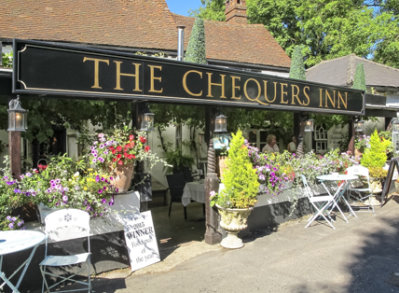
The Chequers Inn, Well, Hook, Hants
The Chequers Inn, Well, Hampshire in August 2016.
The Chequers Inn, Well, Nr Long Sutton, Hook, Hants
The Chequers 

Well Manor Farm Cottages, Flitney Family, Well,  Hampshire
Well Manor Cottages a pair of semi-detached cottages and the place I grew up. We lived in the one on the right of the photograph. Mum and dad were incredibly proud of the garden and spent hours working on it.  (With thanks to my sister Sue for the photo)

Well Manor Farm Cottages, Dutch Barn, Cowshed, 1960s, Flitney Family, Hook, Hampshire
Looking in the opposite direction with the dutch barn and cowshed in the distance.

The same pair of cottages in 2011 this was some time after our parents died. 

Well Manor Farm Cottages, gone but not forgotten, Nr Long Sutton Hampshire
Aug 2016 - can you spot the difference?

The house where we lived has been completely flattened, the other half of the pair still stands but our home has gone. The only thing left is a gate and a mark in the grass where the path used to be.

Well Manor Farm Cottages, Well, Nr Long Sutton, Hampshire


Well Manor Farm, Well, Nr. Long Sutton, Hampshire
This photograph taken across the fields at the back of the farm might give you a clearer idea. Our house should be directly in line with the dead tree.  Most of the original farm buildings have also been knocked down and replaced.

 These buildings now stand where the dutch barn once stood. Progress? I guess so but I know which I prefer, although having said that most of the farm had fallen into disrepair in the intervening years. 

The back of the new barn.

Another of the new farm buildings

Much of the rest of the village looks almost exactly as it did...

Well, Lower Froyle, Crondall, Nr Basingstoke, Hampshire


Near The Chequers at Well, Hampshire
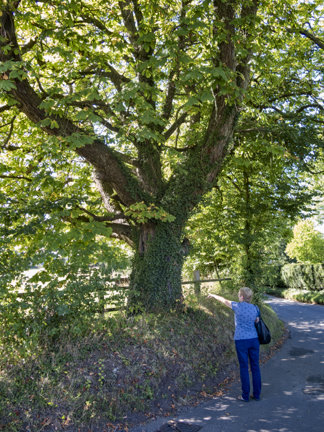
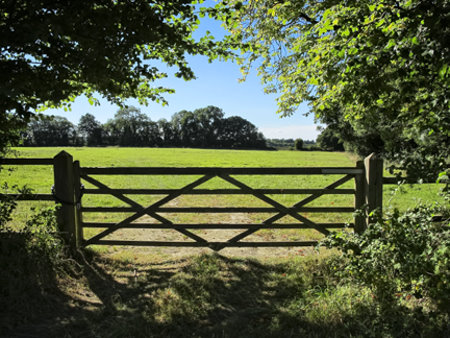
The cricket pitch used to be in the field beyond this fence, I have no idea why I felt it necessary to point that out!  I’m standing in front of one of my favourite trees and the one I used to climb at every opportunity.  As I've grown older, the tree has grown taller - I'm not sure I could climb it now, although I was tempted to try.
Well Manor Farm, Well, Nr Long Sutton, Hampshire
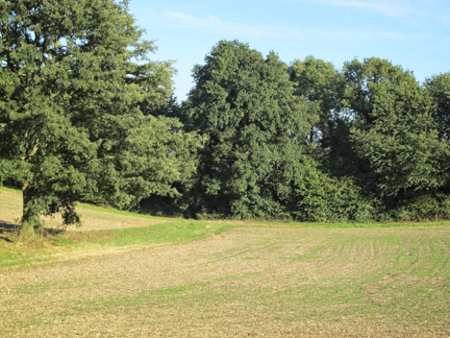
The field where the cricket pitch used to be. 

The well at Well, Nr Long Sutton Hampshire
The well at Well 

The well at Well, Nr Long Sutton Hampshire

William Fullerton who died at Well Manor, August 25th, 1888. The Well at Well.
This well is a gift to the inhabitants of the hamlet from William Fullerton who died at Well Manor, August 25th, 1888.

Cottage at Well, Nr Long Sutton, Hampshire
A family by the name of Biddlecombe lived here.  I believe Mr & Mrs Biddlecombe had a son and a daughter. The little girl and I used to play together until the awful day when she fell out of a tree and broke her collarbone. I wish I could remember her name – Janet perhaps?  She was a good two years younger than me so the day she fell I naturally got the blame.  I remember knocking on their front door the following day and her mother telling me exactly where to go!  That was the end of our friendship. I was seven at the time and have never forgotten the injustice of it all – although I did demonstrate how to hang upside down from a branch – so in hindsight it was entirely my fault – sorry Janet (if indeed that is your name).

Cottage at Well, Nr Long Sutton, Hampshire
I can't remember the name of the family who lived here, but I do remember singing Christmas Carols outside their front door. My sister was responsible for our little band of singers. She had the best voice, and it was left to her to decide on the carols and who should sing what. She had a passion for singing descant, and it was down to the rest of us to follow along with the basic melody.  Unfortunately, the moment she started singing I would find myself joining in.  I just could not get it right no matter how often and how hard we practised. We must have looked (and sounded) a raggle, taggle bunch when we arrived at this particular door, and I don’t think we were very welcome.

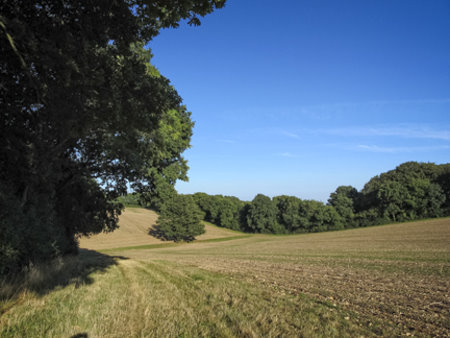
 The following photographs are of the woods and fields at Well Manor Farm.  I’m afraid I was trespassing at this point (Terry had gone to park the car – so he is not implicated in this!) I could not leave without walking these familiar paths and as requests left on the new farm owner’s blog had gone unanswered I decided to risk a telling off. 

Well Manor Farm, Well, Hook, Hampshire

Well Manor Farm, Well, Nr Long Sutton, Hampshire
Taking only pictures, leaving only footprints and a great big chunk of my heart
Well Manor Farm, Well, Hook, Hampshire

Well Manor Farm, Well, Nr Long Sutton, Hampshire

Well Manor Farm, Well, Hook, Hampshire

Well Manor Farm, Well, Nr Long Sutton, Hampshire

Woods at Well Manor Farm, Well, Nr Long Sutton, Hampshire

Well Manor Farm, Well, Hook, Hampshire

Road sign Well, Nr Long Sutton, Hampshire
I started off by saying I’ve not been back to Well for many years and the last time I visited it looked very much as it always has. However, time has indeed wrought changes at Well Manor Farm. Happily, the woods and fields are virtually unchanged.

Stored at the bottom of a box for more than fifty years Auntie Jean's postcard took me on a journey through my memories and reminded me it was time to go home.


Tuesday, 14 June 2016

A Sleepy Dog Story

Once upon a time, there was a boy who longed for a dog of his own. One day when the boy was nine years old, a travelling funfair visited the village where he lived. The fair arrived in large trucks and with the trucks came the showmen in their caravans. Inside one of the caravans was a litter of puppies. The boy enjoyed the brightly painted stalls and the rides, but he quickly lost interest when he spied the puppies.  The boy longed for a puppy of his own and pleaded with his parents to let him have one. They refused… they didn't want a dog, and besides the puppies were of an indeterminate breed and probably had worms or worse! The fair moved on and the boy was heartbroken, and so began the gradual capitulation of the hard-hearted parents. Soon a puppy of a pedigree nature came to stay...

A puppy of a pedigree nature;  A Beagle by the name of Kelso or Kelly as he became known. 


Never a fussy dog Kelly was happy to sleep anywhere.


Kelly and the boy (centre) were inseparable.


Wherever the boy went Kelly went and whatever the boy had Kelly wanted ….


It wasn’t long before the hard-hearted mother fell under Kelly’s spell and turned into a bit of a softy.


Time passed as time will, the boy grew up and Kelly went to heaven. Soon the boy married and left home, and his parents missed him, and they missed Kelly.  But then Patch entered their lives, and it's difficult to be sad with an eight-week old puppy about the place.


Patch liked to sleep on chairs and on loungers, but most of all he liked the luxury of a lap.


Patch loved his new parents, but he missed his brothers and sisters. He needed a playmate and so a second Cavalier King Charles Spaniel by the name of Albe joined the family.


Albe liked to sleep anywhere, but sometimes he stayed awake while his master slept!


Meanwhile, the boy now with two boys of his own was enjoying the friendship of another dog.  Sadly when work took the boy and his family to live abroad, Rosie the Cairn terrier couldn't go with them, and she went to live with the soft-hearted parents. Before they left the boy and his family gave Rosie a special pillow knowing she would be treated like a princess!


Princess Rosie loved to snooze, in her bed, under a desk, on a chair, in a lounger or on a lap.


After a few years, Patch and Albe went to join Kelly in heaven. Rosie grew old. She started to slow down. Her legs would no longer carry her, and her eyes grew tired.  The vet suggested a pair of Doggles (doggy sun glasses) to keep the sun out of her eyes. The indignity of it didn't spoil her enjoyment of life, and she carried on for as long as she could, but eventually she too was called away. 


The kind-hearted parents didn't want another dog.  It might have worms or worse it might die. But what of the boy?  He is now a father of four, two grown-up sons and two little girls. A beautiful dog by the name of Nushka is part of the family, but the boy will never forget Kelly his puppy of a pedigree nature.


Oh yes, the boy now lives in the land of Koalas, kangaroos and other wondrous things and his parents get to visit, and they are all living happily ever after...


...but truth be told the soft-hearted parents would really like another dog...worms and all!

  If you are still awake why not pop over and see what my fellow Sepians are up to here


Love is a four-legged word. Author unknown. 

“A dog teaches a boy fidelity, perseverance, and to turn around three times before lying down.” Robert Benchley (humorist and actor, Broadway Melody of 1938)

Update October 2016: Sadly, Nushka passed away a few weeks ago. She will be missed by everyone who loved her. 

Nushka

Friday, 6 May 2016

A Country Tale - Images of Rural Life

Looking at this week’s prompt it seems appropriate to write about dogs, shepherds, sheep, views, and/or gates. Why then have I chosen to write about countrymen with beards? Simply because the Sepia Saturday photograph (left) reminds me of my great-great grandfather Benjamin Stopps. The two men don’t look particularly alike. The similarity has more to do with them both being men of the land.

My father was also a 'man of the land', a farm worker through and through.  He judged the weather by the feel of the wind and the smell of the air. Clouds don’t only have silver linings they also have a myriad of different colours and hues, each with a different meaning. Did you know a yellow tinge to the clouds is a forewarning of snow?  It may not be true in other parts of the world, but it certainly is in England.   


Farming is a recurring theme in my family. My great-great grandfather Benjamin Stopps (1845-1928) lived and worked at Little Kimble in Buckinghamshire, England. According to the 1881 census, he farmed one hundred and thirty seven acres with the help of two men and a boy. An aunt of mine described him as a witty, handsome fellow with shining flashing eyes. I have to say he looks very dashing in this, the only photograph I have of him. Dressed in his best (or perhaps only) suit Benjamin is pictured at the wedding of his daughter Clara Ann Stopps to Edwin Thomas Bonham in the summer of 1906.

Images of rural life (the title of this post) suggests more than one photograph, not wishing to disappoint I'm going to share a few unrelated images of English country folk.  I hope you enjoy them.


This is James Minns c1901, reputed to be the oldest woodcutter in England. Born in Ditchingham, Norfolk in 1826, he was seventy-five when the photograph was taken. Suffering from failing eyesight the authorities decided James would be better of in the workhouse. James disagreed declaring he would sooner lie down and die by the side of the road. When the local squire heard this he offered him a free cottage and a shilling a week for the rest of his life.


Can you guess the occupation of 'Brusher' Mills?  In this photograph taken c1895 he is holding a two-pronged fork and has a large pair of tweezers hanging from the front of his waistcoat.  Both useful items when you spend your days catching snakes. Once caught the snakes were exhibited and sold at fairs and horse sales.


The falconer; Major C. Hawkins Fisher, of Stroud, Gloucestershire. November, 1901. 


This photograph taken in the North Riding of Yorkshire c1900 shows Kit Metcalfe knitting stockings. Kit knitted the fancy tops while his wife Betty did the rest.   


A forester on the South Ormsby estate, Lincolnshire enjoying a clay pipe after his midday meal. 


The following image shows a carter carrying the sign of his trade, a whip, he is wearing a carter’s smock and a crowned felt hat. The male 'smoke frock' or smock, evolved in the mid 1700s and continued to be worn until after the First World War. Roomy, long-sleeved and extending to the knees, smocks were worn to protect workers from the elements, and to keep their clothes clean.  


This fine looking chap with his flock of Hampshire Downs Sheep was photographed somewhere near Stonehenge, Wiltshire c1900. It's likely he and his sheep were on the way to the Marlborough sheep fair.


A report of the Marlborough Sheep Fair in the Swindon Advertiser August, 1902.


Thanks for visiting. Let me now guide you over to Sepia Saturday where you will be able to see what the rest of the flock are up to.


The Sepia Saturday photograph taken by Colonel Joseph Gale in 1890 is titled Ninety and Nine a Biblical reference to the parable of The Lost Sheep (A shepherd with one hundred sheep goes out to look for the missing one). 
With thanks to Alan Smith/Louise Janes-Stopps for the photograph of Benjamin Stopps
All other photographs Country Life, London.

Friday, 15 April 2016

Sepia Saturday 326 - Subject Technical Data


Don’t be fooled by the title of this post I won’t be providing much (if any) technical data.  I can tell you the proof sheet was produced by my husband. He used Kodak Safety Film, and the proof sheet is numbered from 0 to 35.  Kelly our Beagle is the subject of most of the photographs. Our son Steven features in a few of them, and I'm also present, but I would prefer to gloss over that!   Why do husbands delight in taking photographs of their wife’s bottom?  Perhaps I generalise, maybe it is only my husband who does it? 


Our lovely son Steven aged about eight. He is in his forties now with four children of his own.  


This is Kelly our much-missed Beagle. He was smart and funny, with a big personality and a double helping of mischief.


The 'bottom' shot top left.  Could it be any less flattering? 


Yet more non-technical data;

My two-month break from this blog turned into very nearly a five-month break while I dithered. Having the family over from Australia for a long holiday was wonderful, but I felt very low when they went home. I thought about all the things we should have done, and didn't and worried because they all had really nasty colds followed by chest infections (not surprising when you think of the number of hours spent in the air). Then our heating broke down, and we had no hot water and, and…  Putting all that aside we had a lot of fun and enjoyed being together (you can view some photos here and here should you wish). I started posting to my other blog when the family went home, but it took me a lot longer to get back to this one.  Anyway, I finally wrote a post last week, I also joined a new group; We Are Genealogy Bloggers and then took a look at Sepia Saturday and thought, hooray – I've got something that just might work. I hope it does!


Visit Sepia Saturday for more stories and photographs.

Sunday, 3 April 2016

Leonard Flitney (1880-1953) a third son for Eli and Ellen.

Leonard Flitney was five weeks old when Benjamin Disraeli, 1st Earl of Beaconsfield stepped down from his second term as Britain’s Prime Minister. Born on the 14th March, 1880 Leonard was the third son of my paternal great grandparents Eli and Ellen Flitney. The weather showed great promise that spring, but July bought violent thunderstorms and heavy floods. The rain being so persistent that hay was spoilt and wheat damaged. The weather may not have been the only thing on Eli’s mind as he toiled in the fields close to his home at Chalkshire in the parish of Ellesborough. He like many other farm works must have been aware of the general decline in farming. [The opening up of the American prairies to cultivation and the advent of cheap transportation had a devastating impact in Britain. Wikipedia]


It was fortunate then that Ellen could supplement the family income by turning her hand to the plaiting of straw. Straw plaiting to make hats and bonnets was a major cottage industry in Buckinghamshire, although that too would begin to decline as imports of cheaper lighter plait started to arrive from China and Japan. It's easy to imagine Ellen busy plaiting while her sons played at her feet. Albert the eldest of her boys now five may even have helped his mother by clipping the finished plaits. It was quite normal for very young children to learn the art of plaiting so Abel may also have lent a hand. But, by the time her new-born son Leonard was old enough to be of use the industry was in steep decline, and the Education Acts of 1870 and 1880 were beginning to have an impact meaning more children were required to attend school.


Wednesday 24th August 1887 must have been an unforgettable day in the life of the then seven-year-old Leonard. With a fire burning out of control at Chalkshire Farm, it’s easy to imagine the commotion.  The alarm was raised at Aylesbury Fire Station at 9.41am, and the brigade arrived a little after 10am. On approaching the farm they found eleven hayricks and several farm buildings alight. Messages for assistance were sent to Wendover and Princes Risbrough Fire Stations. An account in the Bucks Herald of 27th August reports; The Princes Risborough Fire Brigade, which had not been called to a fire for several years, was hastily summoned. The bugler gave the alarm at 10.15 am, and in fifteen minutes the members of the Brigade had assembled from various parts of the town and set out with their engine for the scene of the conflagration.  Despite a plentiful supply of water, the fires continued to burn for more than twenty-six hours. The Princes Risborough Brigade left in the evening, but the Aylesbury men continued working all night and until mid-day on Thursday, by which time they had succeeded in putting out the fire, and the remnants of the burning ricks - which were worthless - were pulled to pieces, and a watchman left in charge.

I have a picture in my mind of Leonard, his brothers and the rest of the village children in a state of high excitement while all this was going on.  It can’t have been much fun for the adults, although another report in the same newspaper is careful to point out that the farmer, a Mr. Richardson was insured. 


With his school days behind him, it would be reasonable to assume Leonard would follow his father and brothers into farming. Perhaps he did for a while but the continued decline in the industry, coupled with low wages meant many young men were looking for work elsewhere. Leonard chose to stay at home and by 1901, found employment as a rural postman. By this time, his mother Ellen (recorded as Eliza E - in the 1901 census) was widowed, Eli having died in 1899 at the age of 45.

A month after his twenty seventh birthday, Leonard married Maria Hall the daughter of James and Martha Hall of Great Barrington, Stow on the Wold, Gloucestershire. The wedding took place on the 16th April, 1907 and early the following year Maria gave birth to a baby girl named Hilda Maria. Sadly, the baby lived for just ten months dying shortly before her 1st birthday in 1909. Maria's father passed away in October of the same year and was laid to rest on a stormy afternoon in the New Cemetery at Great Barrington. His obituary in The Cheltenham Chronicle of the 23rd October 1909 reported;  the rain descending in driving showers as the choir and mourners sang hymn number 499 (What a friend we have in Jesus) at his graveside. The report continued;  James Hall earned the respect and esteem of the whole neighbourhood during his more than 30 years as a blacksmith. It was said his hearty genial manner was known to all his many employers. He was a constant worshipper at the church, a member of the choir for 30 years and a churchwarden.


Following the death of her child and her father, Maria might have been pleased to see the back of the old year. By then heavily pregnant with her second child, she was probably looking forward to happier times. In the spring of 1910, she gave birth to a baby boy. The joy at his birth must have quickly changed to heartache when less than four weeks later Arthur passed away.

They say history repeats itself, and for Leonard and Maria it certainly did.  

Less than a year later, Maria gave birth to her third child another son named Leonard after his father. The 1911 census records the couple living at Chalkshire with their new-born son and a visitor. The visitor's name was Sarah Ann Wheeler, and her occupation that of a ‘monthly nurse'. I was intrigued by that term not having come across it before. It appears Sarah was engaged by the family around the time of Maria's 'lying-in' to look after her and her new-born son. Sadly, she would also be called in to lay out the dead, and as in this case the two types of visits often coincided.  The baby lived for only a few short weeks. I probably don't need to tell you childbirth was far from straightforward in the early part of the twentieth century, and infant mortality was high.


The 1911 Census, showing Sarah Ann Wheeler  'monthly nurse'. It also shows that Leonard is now employed as a Gardener Domestic.

It would be easy to presuppose the couple gave up the hope of having a family, but on the 13th April 1915 Maria gave birth to another son (George). This time their joy at his birth was not to be cut short.

Leonard and Maria whilst preoccupied with the loss of their first three children, and the birth of their new son would still have been aware of events in the wider world. April 1912 saw the Royal Flying Corps established reflecting Britain’s recognition of the growing importance of military aviation. This significant occurrence was overshadowed when a few days later the Titanic sank with the loss of 1503 lives. In June 1913, Suffragette Emily Davison threw herself in front of the king’s horse at the Derby, and died in hospital a few days later. On 28 June 1914 the heir to the Austro-Hungarian throne, Archduke Franz Ferdinand was assassinated by Gavrilo Princip in Sarajevo. This must have felt like a remote and insignificant event in the lives of Leonard and Maria, but the conflict escalated sharply and would ultimately result in the outbreak of World War One.

From the available records, it's clear Leonard served in the army during the First World War but with 60 per cent of soldiers' service records destroyed in 1940, discovering what he did and where he went is proving difficult.  I have a copy of his Medal Index Card, which shows he was a private in the Essex Regiment (service number 325487) and in the labour corps (service number 6840430).


The bottom left hand portion of the Medal Index Card should include the Theatre of War first served in and the date of entry therein, unfortunately in Leonard's case its blank.  According to The National Archives British Army Medal Index Cards 1914-1920 this indicates he went to France in 1916 or later. He was awarded the British War Medal and Victory medal. [The Roll Number LC/101B28028460 is the old reference for the actual Medal Roll in which he appears.]

Interestingly Leonard appears on both the 1918 & 1919 absentee voters list.

The entry for 1918 shows; 
Flitney, Leonard Butlers Cross 325487 Pte. (private) 9th Essex
While the entry for 1919 shows;
Flitney, Leonard 325487 L Cpl (Lance Corporal) 1 8 Essex L.C

From that it is clear Leonard was still in the army in 1919, now promoted to Lance Corporal. Oddly enough Maria also appears on the 1919 absent voters list. Perhaps she and her young son were staying with family while Leonard was away?  Between the years 1919 and 1922 Leonard left the army and the couple with their son move to Sunnyside Cottage, East End, Hendon, Middlesex. According to the electoral registers, they were there from 1922 until 1931.  

The trail went a little cold after that until thanks to the recent publication of the 1939 register, I found them again. Leonard now widowed was living at Pinner Lodge, Moss Lane, Harrow with his son George.  According to the register, Leonard was working as a gardener and George a clothing salesman. Leonard died in 1953. I'm unsure when Maria died as I’ve yet to track down a death certificate, but I can safely say it was sometime between 1931 and 1939. Finding the actual date is firmly on my to-do list. 

Other things on the to-do list are to find any children of George and Ethel Florence Flitney (Dakin).  George married Ethel in the third quarter of 1939 in the district of Hendon, Middlesex. Happily, George outlived both his parents dying as he did in the 1970s...

As ever this is a work in progress, and I would be glad to hear from anyone who could add anything to the above.

~~~~~~~~~~~~~~~~~~~~~~~~~~~~~~~~~


Chalkshire is in a picturesque part of Buckinghamshire in England close to Chequers Court, the Prime Minister’s official country residence. If you are thinking of visiting the area there are some wonderful walks through the hills and valleys within the Chiltern’s area of outstanding natural beauty.


Source Documents

England and Wales Birth Registration Index, 1837-2008, database, FamilySearch(familysearch.org/)

England and Wales Death Registration Index 1837-2007," database, Family Search   (https://familysearch.org/ark:/61903/1:1:2NRT-ZB9

County of Buckinghamshire, Aylesbury Division. Absent voters list Yr. 1918/1919

The 1939 Register database accessed via FindMyPast

British Army WW1 Medal Rolls Index Cards, 1914-1920 for Leonard Flitney, accessed via Ancestory.

Absentee voters lists Wendover Polling District Parish of Ellesborough accessed via FindMyPast


Wikipedia Great Depression of British Agriculture

~~~~~~~~~~~~~~~~~~~~~~~~~~~~~~~~~

This is the sixth in a series of posts about my Great Grandparents Eli and Ellen Flitney and their children and grandchildren. The following is a list of the previous posts with a link to each one.

(2) Albert Flitney and his son Leonard - A Sad Tale
(3) Abel Flitney - Second Son of Eli and Ellen
(4) Arthur Denis (Jack) Flitney - Searching for my Grandfather from Belgium to Butlers Cross
(5) Just how many sons did Eli and Ellen have? (to be published soon)

Sunday, 22 November 2015

A Vintage Holiday Greeting

As many of you already know our son, his wife and their two little daughters are spending Christmas and the New Year with us.  They arrive on the 6th December and return to Australia towards the end of January 2016, which means I will be away from my blog for a few weeks.

But … before I go I'm sending you a message, wishing a wish or two.
To let you know I'm thinking, this Christmas tide of you.


Kind thoughts  


and Yuletide greetings


I'm sending loud and clear.

To wish you a Merry Christmas and the happiest New Year.


I am very grateful to everyone who visits me here, thank you. I hope this coming holiday season brings you all much joy and happiness.
I hope to see you again in 2016.
With love, Barbara xx


Related Posts Plugin for WordPress, Blogger...