My mum Rene (Alice Irene Flitney née Harding) died in 1999. When my brother, sister and I went through her things we found an envelope full of old newspaper clippings and other bits and pieces. We looked through the papers and put the envelope away, but those yellowing pieces of paper keep whispering of half-forgotten times and places. Places like Butlers Cross, Stoke Mandeville, Aylesbury, West Wycombe, Little Kimble, Wendover, Ellesborough, Southcourt and Princes Risborough.

Wednesday, 9 September 2015

I'm a Phillumenist!

Not a lot of people know that and why should they when I've only just found out myself.


According to Wikipedia Phillumeny (also known as Phillumenism) is the hobby of collecting different match-related items: matchboxes, matchbox labels, matchbooks, matchcovers, matchsafes, etc., The word, derived from Greek phil- [loving] + Latin lumen- [light], was introduced by the British collector Marjorie S. Evans in 1943 (who later became president of the British Matchbox Label & Booklet Society, now renamed as the British Matchbox Label and Bookmatch Society). A person who engages in Phillumeny is a Phillumenist. 

Going by the notes in my scrapbook, I became a phillumenist in 1963 and by September of that year I had 500 matchbox labels in my collection.


I seemed to do very well in that first year. Did my dad buy a collection to get me started? I feel sure he must have done. Back then the two of us spent almost every Saturday morning scouring the local second hand book shop – is it possible they came from there? Where is that time machine when I need it?  Three years later, another 100 or so had been added to the collection. The final tally from December 1975 is 699. 


I remember spending a great deal of time carefully gluing matchboxes onto pages. I must also have spent a lot of time counting them!


Choice Wines and liquors ... We Deliver


Hines' Downtown Liquor Store PH. WA. 63529 North Division Near Main 


I'm not sure what possessed me when it came to this page, pin-ups next to orphanages. So much for classification – what was I thinking?


A page dedicated to Camp 'Flags of Nations'. At first glance, they all look exactly the same (apart from the individual flags), but a closer inspection reveals several differences.


I assumed the oldest is on the left and the newest on the right. Do you agree?


Bomber Matches - Sahigara Match Works, Chorvad Road, (Gujarat, India)
This company is still in existence although I couldn't say if they still manufacture matches. The business is owned by Abdul Razak Ahmed. Trading as: Abdul Razak & Co. 
Also Sahigara Oil Mills.


The Ship and Swan Vestas were the matches of choice when I was growing up. We always had several boxes around the house.


Family holidays were spent in Devon and Cornwall where many a matchbox could be found.


Mum and dad with their pride and joy – a converted Bedford Dormobile. Dad did all the conversion work himself (with a little help from my brother Tony) even the tricky job of fitting the lifting roof.  The first holiday to Cornwall caused a few anxious moments because dad was concerned the roof would ‘lift or leak’ on the way, but he needn't have worried it worked beautifully.


The Old Cornish Mine series of matchboxes first appeared in 1962. A product of  the Cornish Match Company of Halsetown, Cornwall.  Rosemergy mine at Morvah was opened sometime prior to 1788 and reopened several times as part of the Morvah and Zennor Mines but was finally abandoned after a short-lived boom in tin prices in 1874.


Mum and I and the interior of the converted Dormobile.


Uncle Tom Cobley and all from the Old West Country series issued by the Two Counties Match Company, Honiton, Devon from 1963.

Although my collection is quite small in comparison to some, it contains a wealth of social history, which should keep me happily researching for years.


This is my contribution to Sepia Saturday 296; Adverts, Wine and Old Labels

Now it's time to drink up and head on over to Sepia Saturday where the party will soon be in full swing.


Those of you with an interest in match box collecting might like this site Phillumeny.dk 

Thursday, 20 August 2015

Eating at the top of The Tower

London's Post Office tower was considered the height of luxury back in the 60s. The Revolving restaurant was hailed as "The Most Unique Restaurant in Great Britain" although looking at the photographs now it is not quite as glamorous as my memory would have me believe so perhaps I'm not a million miles away from the brief.


The original Top of the Tower restaurant opened in May 1966 and closed in 1980 amid security fears after an IRA bomb exploded close to the men’s toilets. 


Costing £2 million to construct, the tower is built from 13,000 tons of concrete, steel and glass. At the time of opening it was the tallest building in London and remained so until the building of the NatWest Tower in 1981.

Certificate of Orbit

The bearer has dined in orbit at the Top of the Tower, Butlin's revolving Restaurant, located 525 feet at the top of G.P.O. Tower Maple Street, London, W.1.


J. Arthur Dixon Natural colour photgravure
The Post Office Tower, London, the centre of a new telephone and television communications system. Two lifts convey the public to the top where there is an observation platform, a cocktail bar, and a revolving restaurant.


 Rank’s Look at Life documentary footage from 1966 on You Tube


We visited the Top of the Tower restaurant in the spring of 1969. Terry and I are on the left (as you look at the photo) with our friends Pauline and Michael on the right. Notice how Pauline and I are doing our best model poses for the camera!  Contrast that with the next photo where we have all dissolved into laughter over something or other. How I wish I could remember what! Sadly, Michael died a few years ago, but we are still in touch with Pauline and the three of us meet up from time to time. 


Today, the renamed BT Tower serves as a television network switching centre. Parts of the building are occasionally used for charity events and earlier this summer a pop-up restaurant served lunch and dinner to 1,400 diners selected at random by public ballot. The event celebrated half a century since the tower was officially opened by the then Prime Minister Harold Wilson on 8th October 1965.

This is my contribution to Sepia Saturday No. 293. To see the other Sepia Saturday posts go to the Sepia Saturday Blog and follow the links.


The Certificate of Orbit and postcards are from my own collection.

Friday, 7 August 2015

HMS Scarborough - A Guest Post by John Flitney

See previous post here

A Whitby class / Type 12. Anti-Submarine Frigate

Photograph reproduced from The Scarborough Story, 1959 - 1961 Conway Bourke Ltd. Gosport, Hants 

After completing the gunnery training at Excellent I, along with the others from the training class who were joining Scarborough spent a few weeks in the Royal Naval Barracks at Portsmouth, which was then named HMS Victory. No not that Victory, I am not that old. That famous ship is in permanent dry dock within the naval dockyard, (and well worth a visit) the barracks was a ‘stone frigate’ outside the dockyard and now renamed HMS Nelson. During those weeks I was able to get long weekend leave, Friday pm to Monday 0700. A local coach company provided coaches for service personnel to most of the major cities in the country and I could get on the one to Manchester and be dropped off at Carfax in Oxford and Dad would come and pick me up from there about 7pm. Only snag was that the return coach got to Oxford at 0330 Monday morning, not Dad’s favourite time of day.

In the barracks we began to meet others who would become our shipmates for the next twenty-one months. On the 29th September,1959 the whole ship’s company assembled for the first time in the RNB drill shed and from there marched to South Slip Jetty in the dockyard and halted alongside our new home HMS Scarborough. After the commissioning ceremony we went aboard and got acquainted with our accommodation and layout of the ship. After all the dockyard officials and other senior officers and dignitaries had left “Clear lower deck!” was piped and we all mustered on the forecastle for a welcoming speech from the captain and to be told what we would be doing in the near future.  The Captain, Captain Josef Bartosik DSC RN, had served with the Polish navy from 1935 - 1945 and then transferred to the British navy and was now appointed Captain (F) 5th Frigate Squadron, that was us and HMS Tenby and HMS Torquay, HMS Salisbury would join us later.

After a few days we sailed for Portland, Dorset, for our ‘shake down’ where we all got used to our routines and got to know our specific duties and places for work, defence and action stations. Then we started the ‘work up’ exercises, all manner of evolutions in harbour and at sea to bring us all together into an efficient fighting unit. That achieved we were sent to Londonderry to take part in a N.A.T.O. exercise ‘Sharpsquall’. Appropriately named as it started for us with a ferocious gale in the Foyle. Scarborough had to secure to a buoy for the night. This entailed securing one anchor to the fo’c’sle deck, parting the anchor cable from it and then passing the chain forward through the ‘Bullring’, a circular fairlead, right at the bows and down to the buoy. That was the easy bit, the difficult part on this particular night, as the wind and water were so rough, was attaching the chain to the ring on the buoy. Not an easy task at best but one made really hard and dangerous for the ‘buoy jumper’ in those conditions. I was one of the sea-boat’s crew for the task and the coxswain had great trouble getting close to the violently moving buoy without damaging the craft and close enough for the man to jump on the thing. The job was eventually achieved and by the time the boat was hoisted back inboard the crew were cold, wet and exhausted. We were sent to the sickbay and to my surprise and pleasure I was given my first tot of rum, I was under age at the time but this was for medicinal reasons, the M. O. said so. During these first weeks aboard we had all been making new friends and I discovered that two other seamen lived in Oxfordshire not many miles from Murcott. Dusty owned a car and when we had weekends free we would share the fuel cost and travel in style in his Ford Eight. This all ended sadly late one Sunday night on the way back to Pompey (Portsmouth). On the old A34 between Newbury and Whitchurch, miles from a phone box as per usual in these instances, the engine blew up putting a con-rod through the side of the crankcase.

Old A34

Not the best place to breakdown so we started walking and discussing what sort of big posh car we would like to stop and pick the three of us up. There was not a lot of traffic at that late hour but eventually a car stopped, it was a stylish Jaguar, leather seats etc. The driver kindly agreed to take us, so we all got in the back much relieved at our good fortune. He dropped us off outside Aggie Western’s Sailors Rest not far from the dockyard main gate. As I recall conversation in the car had dwindle after our discovery of some scanty female underwear on the floor of the vehicle. I think perhaps we were rather enviously speculating what sort of weekend the driver might have had. The other one in the trio was Roger, he and I became ‘oppos’ and would have many ‘runs ashore’ together. He was a keen Gilbert and Sullivan opera fan and introduced me to those delights. Christmas was spent in Portsmouth with leave to both watches. So half the crew were home for Christmas and the others for New Year. During this time the dockyard carried out some maintenance. Then after a few more refresher exercises off Portland and another brief stay in Portsmouth the squadron sailed for the Far East on March 4th. On the way we did a S.E.A.T.O exercise and had a 48 hours visit to Gibraltar. This was my very first time on foreign soil. I spent my evening ashore taking in the sights of the town and I particularly remember the Flamenco dancers in the bars. Gorgeous girls in flowing dresses, very lively music to which they danced and sang with passion, while playing castanets. I didn't drink much but went back aboard intoxicated with the beauty of it all.

From The Scarborough Story, 1959 - 1961  

From Gibraltar we accompanied HMS Ark Royal to Malta, doing various excises with the Mediterranean Fleet on the way.

From The Scarborough Story, 1959 - 1961  

After a few days there we sailed east again to Suez and through the canal stopping next at Aden. My brother Richard was stationed there with the RAF but due to the civil hostilities ashore ships leave was restricted and alas we couldn’t get to meet.

From The Scarborough Story, 1959 - 1961  


Both from my collection

On from Aden to Colombo and then to Singapore arriving there on the 4th of April. Where we would stay for two weeks. Here I quote the words of the ship’s magazine about those weeks

“This gave us time to find the advantages and disadvantages of Terror canteen, Tiger, Sambawang, Tiger, Johore Bahru, Tiger, Singapore itself and Tiger. By the end of the period we were prepared to settle for Tiger.” 

HMS Terror was the naval base/dockyard and barracks situated on the north side of Singapore Island. Close by the dockyard gate was a canteen and bar, here I sampled my first Tiger beer, a brew I still like to this day. When it was really hot weather Tiger Tops was a favourite as it was very refreshing. It was Tiger shandy really. When the bar got really busy there could be as many as nine barmen working flat out. They worked in threes, one pulling the pints, two at a time. His mate had what looked like a water-pistol in each hand, they were actually to dispense the draft lemonade and he would quickly fire a shot in each glass. Payment was made to the third member of the team while this was going on and you were away with your drinks in no time at all. Another first for me was Monsoon drains, large concrete open channels to take the huge amounts of rainwater during the Monsoon period. They could be on average two feet wide and three feet deep as were the ones around the canteen. I mention them now because late one evening at the canteen a group of us saw something amazing. Tables and chairs were set out around the outside of the bar and the further ones were down a flight of steps and over a monsoon drain. The path to and from the bar was poorly lit and the steps quite dark. A group of five came off shore and wanted a last drink, to top off the ones they had already consumed. They nominated the least inebriated among them to get the beers. He trundle off to the bar like he was walking the deck of a ship in a force nine gale. The drinks were served in tapered pint glasses, we saw him next leaving the bar in much the same fashion as he had approached it, only now he had the five glasses clutched between his huge hands. No tray for this boy! On reaching the steps he paused for a moment before starting down, toward the bottom he lost his balance but quickly recovered by taking several steps to his right. This put him away from the bridge and on the edge of the drain, we all held our breath but he quite nonchalantly stepped over it and with succinct directions from his mates made it back to the table. As it happened said table was on sloping ground and even then he managed to put the drinks on it without losing any beer the whole journey. For which he got a big cheer, after taking a bow he sat down and promptly fell backwards out of his chair. For which he got an even louder cheer.

Up in the barracks were all the usual offices, parade ground etc plus a NAAFI shop. There were one or two other shops and a barbers shop with most of the staff being pretty Asian girls. A crafty ploy, I think, by the Commander to encourage ‘Jack’ to get his hair cut regularly. Sambawang was a village close by the dockyard and I first went there with my oppo Roger. He had spent some of his childhood in Penang, an island 440miles up the northwest coast of Malaysia so had some knowledge of the area and he introduced me to the culinary delights of the Orient. Starting with a Chicken Chowmein type dish, at a street stall in the village. There were promises of a proper curry too once we got into Singapore city itself and a visit to the delights of Boogis Street…but that’s another story….

From The Scarborough Story, 1959 - 1961  

to be continued

Friday, 24 July 2015

The Grand Dame of Park Lane...


 Luggage label from 1929 (via)

Until the 1730s, the site on which the hotel now stands was described as meadows and ‘swampy meads’. The first building on the site was a large detached house located on the south side of Upper Grosvenor Street. The house passed through several owners, including the Duke of Cumberland and The Duke of Gloucester. The property changed hands again in 1806 when Lord Grosvenor purchased Gloucester House (as it was then known) and in 1808, he re-named it Grosvenor House. It remained the Grosvenor family’s London home for over 100 years. 

Grosvenor House facade c1800 (via)

At the outbreak of the First World War the house was put at the disposal of the Government, and occupied by the Food Controller’s Department until 1920. It was then put up for sale and purchased by a commercial speculator by the name of Mr. A. O. Edwards. It was Edwards who built what is now the Grosvenor House Hotel. The architect was L. Rome Guthrie, with external elevations by Sir Edwin Lutyens.  Work began in April 1927 and was completed in the spring of 1929. Not everyone approved of Mayfair’s new landmark. In a letter to The Times, it was described as an insult to the good taste and aesthetic judgement of the citizens of the metropolis.

The Grosvenor House Hotel (via)

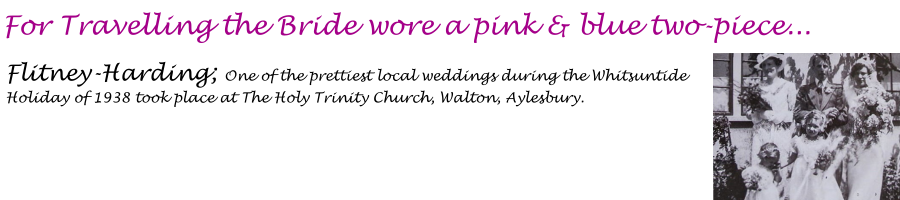
The hotel opened its doors to the public on the 14th May, 1929. A press release announced the standard set by Grosvenor House begins with better food, wines, services and private accommodation than has so far been achieved, and it ends with a diversity of social and recreational amenities.  In addition, the hotel was the first in London to have a bathroom and running iced water to every bedroom.

26 September 1929 - Yorkshire Post and Leeds Intelligencer

I’ve read that Queen Elizabeth II learnt to skate on the Grosvenor House Hotel ice rink. I have no way of knowing if that little piece of information is correct. The hotel certainly housed an ice rink until 1934 when it was converted into a banqueting space.

Grosvenor House Hotel Advertising Postcard c1930s

World War II brought dramatic changes to the hotel. The Great Room became home to the Officers’ Sunday Club. The hotel was also used briefly used as an annexe to the Immigration Section of the US Embassy; and in 1943, the hotel became the largest US Officers’ mess, serving 5.5 million meals in two years.

A 92 bedroom extension was added to the hotel in 1956. This was only made possible after the death of Baron Bruno Schröder, who had acquired the lease of 35 Park Street in about 1910, and refused to give it up. He remained in his house until his death in 1943, when permission to demolish the building was finally given.

Several major events took place in the 60s including a concert performed by The Beatles. In 1963 the hotel was acquired by Trust Houses who spent £500,000 on refurbishments.

While considering what to contribute to this week's Sepia Saturday, I remembered this photograph taken at the Grosvenor sometime in the 1980s. 


I'm at the front on the right as you look at the picture sitting next to my husband (he with the snazzy red bow tie). We have absolutely no recollection of the names of the people sitting with us. We were introduced on the night but didn't meet them again, which was often the way with these events. The only reason we can safely say the photograph was taken at The Grosvenor is because it is in one of their photo sleeves. We can't even remember what the occasion was other than to say it was probably a Ford Motor Company dinner.  My only abiding memory from the night is of being mightily impressed by the exterior of the building. 


More recent years have seen a great many changes at The Grosvenor. It was purchased by The Royal Bank of Scotland in 2001 to be managed by Marriott International and rebranded the Grosvenor House a JW Marriott Hotel.  It underwent a four-year renovation and restoration costing £142 million, reopening in 2008. In 2010, the Indian financial services group Sahara India Pariwar purchased the hotel from Royal Bank of Scotland for £470 million.  

An announcement in the press on March 2nd, 2015 brings the story more or less up to date; Deloitte was today appointed to handle the administration of Sahara Grosvenor House Hospitality Limited, which owns the long leasehold, on behalf of Bank of China. The underlying operating lease with Marriott, which operates the hotel, is unaffected by the appointment and the hotel continues to trade as normal. The rest of the newspaper article is available here


This is my contribution to Sepia Saturday 290; Hotels - Illustrations - Design

That concludes our tour of the 'Grand Dame of Park Lane'. It’s now time to pack your overnight bag for a visit to Sepia Saturday.


Monday, 20 July 2015

I will be back!

I’m afraid I’ve rather abandoned this blog over the past couple of weeks. If you’ve visited my other blog over at March House Books you will know that apart from researching my family, I also run a second-hand book business.  However, that is about to change. I made the decision to close the business and a 65% off everything (which continues until the end of July) sale enticed lots and lots of people to buy.  I’ve just not had a moment to prepare a post for this blog, but I will remedy that as soon as I can.


My cousin John is busy working on the next part of his story so you have that to look forward to. I've also got one or two ideas for a new Sepia Saturday post so hope to get onto that soon. 

March House Bookshop is now closed.
Related Posts Plugin for WordPress, Blogger...